
In 1881, a religious leader named Muhammad Ahmad bin Abdullah bin Fahal proclaimed himself the Mahdi in Sudan, rallying thousands under a green banner and defeating Egyptian forces sent to suppress him. As British interests in Egypt grew following control of the Suez Canal, the uprising became a European concern. General Charles Gordon was dispatched to restore order in Sudan but was soon besieged in Khartoum by Mahdist forces. In response, Britain launched a desperate rescue mission up the Nile under General Garnet Wolseley, relying on Canadian voyageurs to navigate the river’s treacherous cataracts.
Wolseley decided to send a force up the Nile to the besieged city using specially constructed whale boats to transport the troops. The problem was the Nile cataracts that blocked passage on the river. Wolseley knew about rapids and portages because he was the same officer assigned the task of moving the British army and Canadian Militia to the Red River colony in Western Canada during the first Riel disturbance of 1870. He had worked with the Canadian voyageurs before on the Winnipeg River and never lost a man.
377 voyageurs signed up for the six-month contracts with the British government. They came from rivers and lakes across the country. There were Mohawk, Saulteaux, Iroquois, and white boatmen from across the country. The Ottawa Daily Citizen reported on October 15, 1884: “We have on board all sorts and conditions of men, as respects nationality, creed, character, and usual occupation... We have English, French Canadians, half-breeds, and some Englishmen in the Winnipeg detachment who have not been long in Canada. The body comprises bank clerks, store clerks, mechanics and labourers, and of apparent cutthroats and professional drunkards, we have a few.”
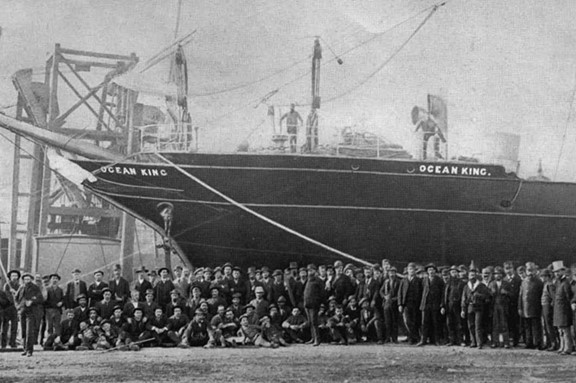
They sailed from Quebec City on the Ocean King for Alexandria, Egypt. General Brackenbury wrote in his “Journal of the River Column: “Out of the Contingent of 377 men that left Canada, ten had died, six of whom had drowned in the Nile. Their six months’ engagement expired on March 9; eighty-nine reengaged, and sixty-seven of those had ascended the Nile with the River Column. Without them, the ascent of the river, if not impossible, would have been far slower and attended with far greater loss of life. Without them, the descent of the river would have been impossible. Officers and men, they had worked with unceasing energy and a complete disregard of danger.”
Comments ()